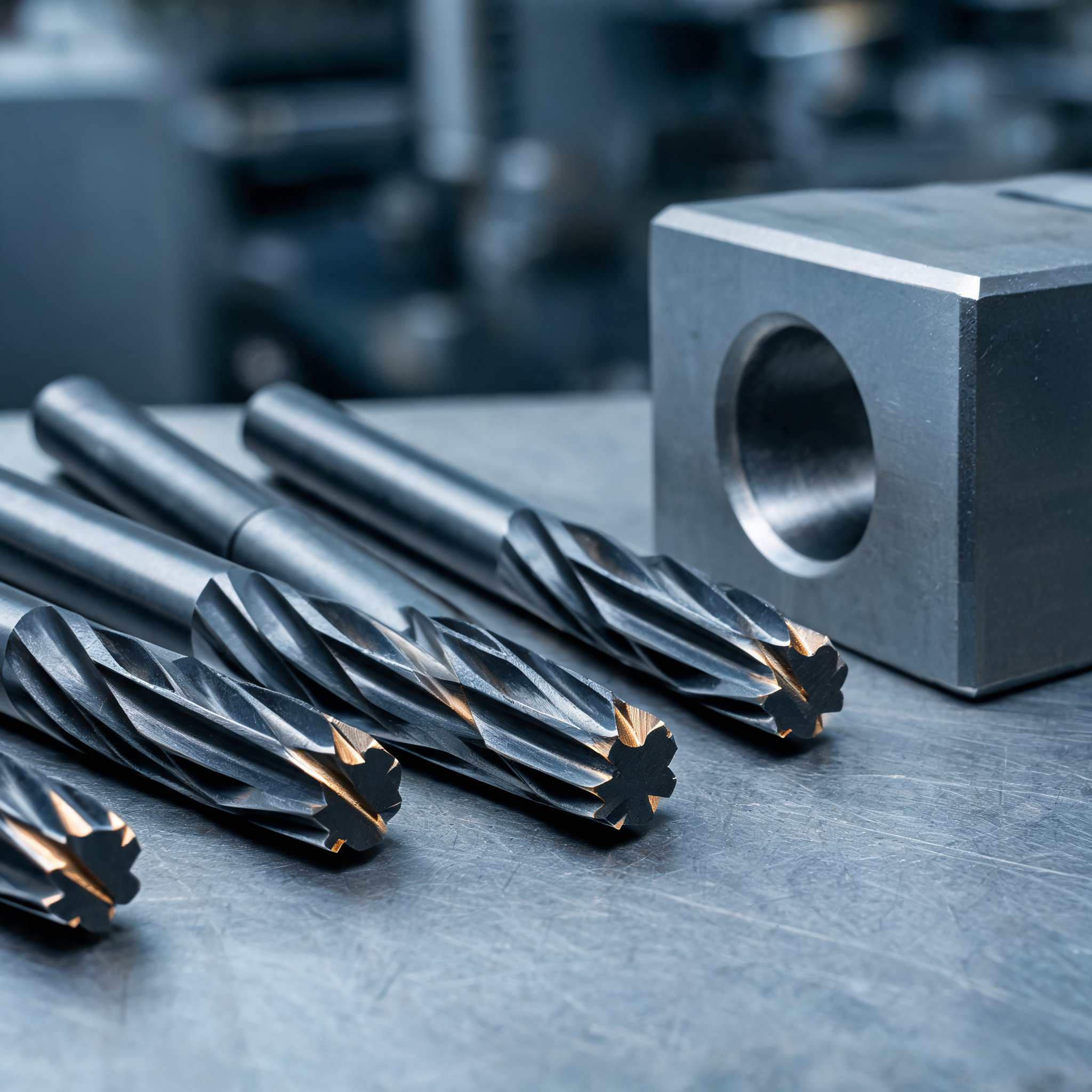
Seco has added the S Ream Core to its reaming line-up: a family of solid carbide reamers aimed at reliable, cost-efficient hole finishing in P, M, K and N workpiece materials. The toolmaker places the range between basic tooling and its high-performance Nanojet solutions, and says the design is intended to deliver consistent hole quality, predictable tool life and a low cost per hole.
The range addresses everyday production where dimensional accuracy has to be maintained but a premium tool may be more than the job warrants. Seco lists a streamlined geometry, standard inspection and a single universal coated grade among the choices meant to keep the tool simple to specify and use, while still holding repeatable IT7 precision.
Cutting geometry is straight-fluted with a 30° lead. Seco stocks 62 diameters from Ø 1.461 mm to Ø 11.960 mm (0.057 in to 0.470 in); sizes outside that span can be requested through the company's MyDesign service.
The reamer sits inside a three-tier reamer portfolio — Core, Plus and Max — which Seco says keeps tool selection clear and application-focused. S Ream Core is the entry point of that structure, positioned between basic tooling and the high-performance Nanojet solutions, and is pitched at work that does not justify a premium tool. The announcement did not include pricing, a launch date or field test results for the range.