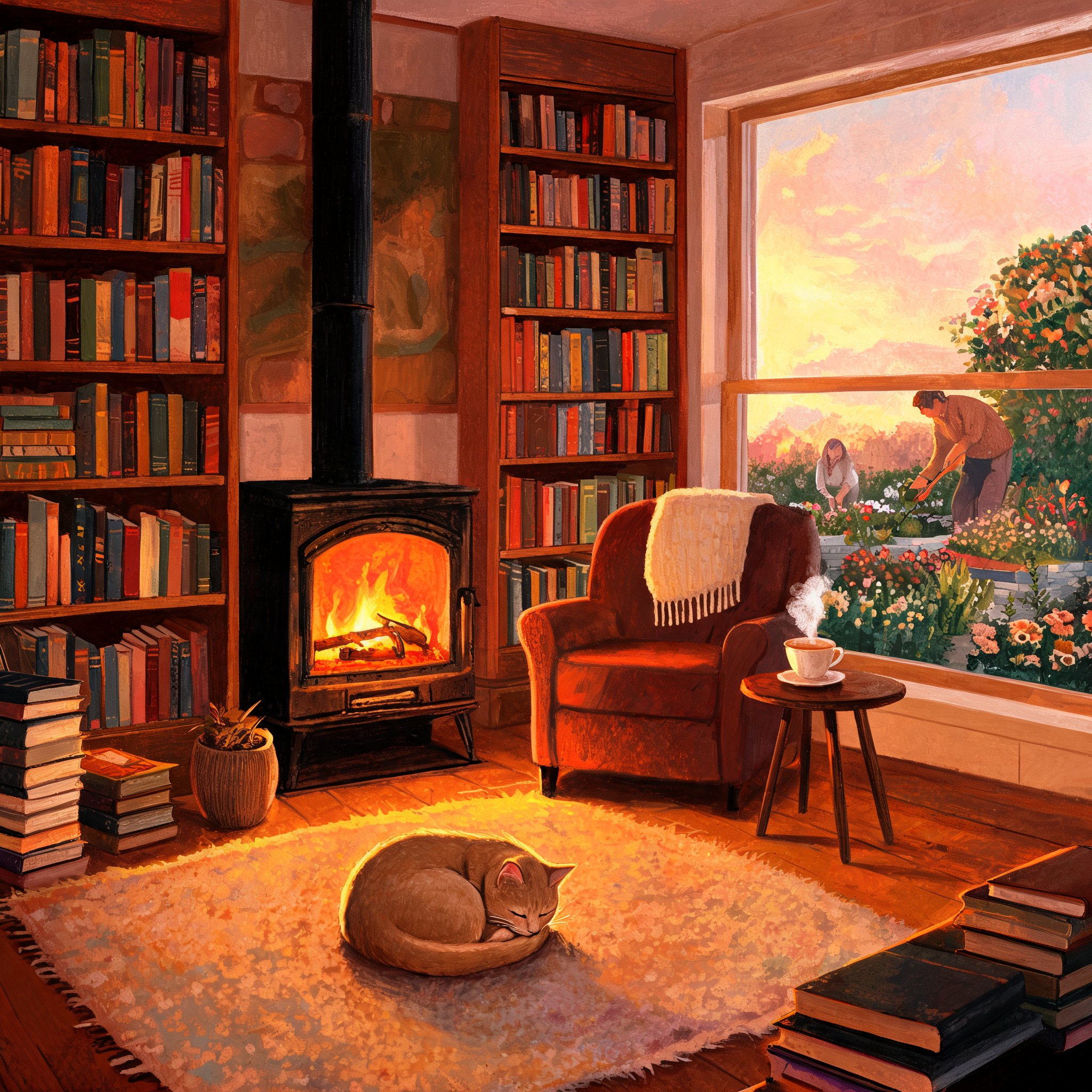
Ravensburger will add The Reading Room to its My Haven jigsaw series in January 2027, introducing the 15th design in the 1,000-piece collection. The puzzle is aimed at book-loving puzzlers and is set to arrive in 2027.
The illustration, by artist Steve Read, shows a tranquil reading retreat filled with books. Ravensburger describes a cosy interior with a roaring log burner and a sleeping cat. Outside, in the last of the evening light, the owners tend to flowers before going indoors for a steaming cup of tea by the fire.
Reading-themed scene joins established series
Sindy Randall, senior product manager at Ravensburger, said the company was responding to the number of reading fans in its puzzle community. She added that Read had created a welcoming setting and that puzzlers would enjoy exploring its cosy details.
My Haven is a series of 1,000-piece puzzles built around idyllic retreats. Previous designs include The Craft Shed and The Beach Hut, while the 2026 festive release is The Christmas Shed. The Reading Room adds a book-filled domestic interior to that theme.
The new puzzle is scheduled for January 2027 and will join a collection focused on quiet, detailed retreats. Ravensburger has positioned The Reading Room around reading, fireside comfort and the appeal of a private haven, with the illustration carrying the series’ established emphasis on welcoming spaces.