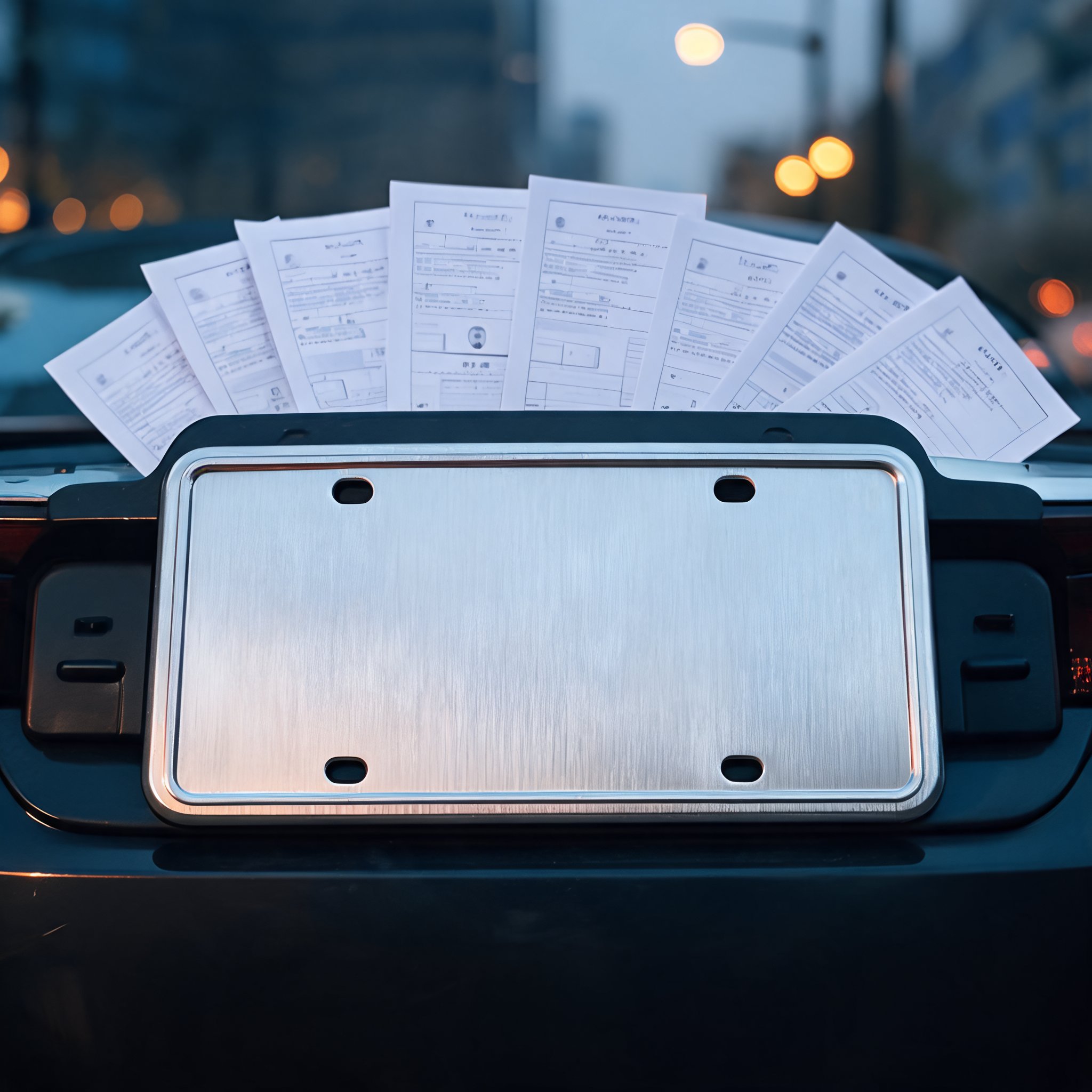
A New York driver’s attempt to use her surname as a vanity plate turned into a sprawling administrative ordeal after the word “BLANK” was matched to ticket records that were never meant for her.
Melanie Blank Brown, a New York resident, chose “BLANK” as her license plate. Until a recent move, she was unaware of the problems accumulating behind the scenes. When her registration was updated with her new address, the new plate entry was pulled into local registration and ticketing databases. Many of those systems contained entries in which the license plate field had been recorded as “Blank.”
The result was immediate. Brown was told she had two outstanding tickets. The count eventually grew to more than 400 violations, with fines totaling more than $40,000. Because the tickets had been issued across the city, they could not be resolved in a single proceeding. Brown had to make repeated visits to multiple judges to have the tickets voided.
To stop the stack from growing, Brown surrendered the vanity plate. The New York State Department of Motor Vehicles has since removed “BLANK” from its pool of available vanity plates, preventing another driver from choosing the same sequence. According to the New York Times, her replacement plate reads “KNALB.”
The case shows how a seemingly harmless personalized plate can collide with back-office data entry. The article does not specify which agencies’ systems were involved or how each record came to use “Blank,” but the outcome was a costly, time-consuming cleanup for a driver whose plate happened to match a value that appeared in records where the plate field read “Blank.”