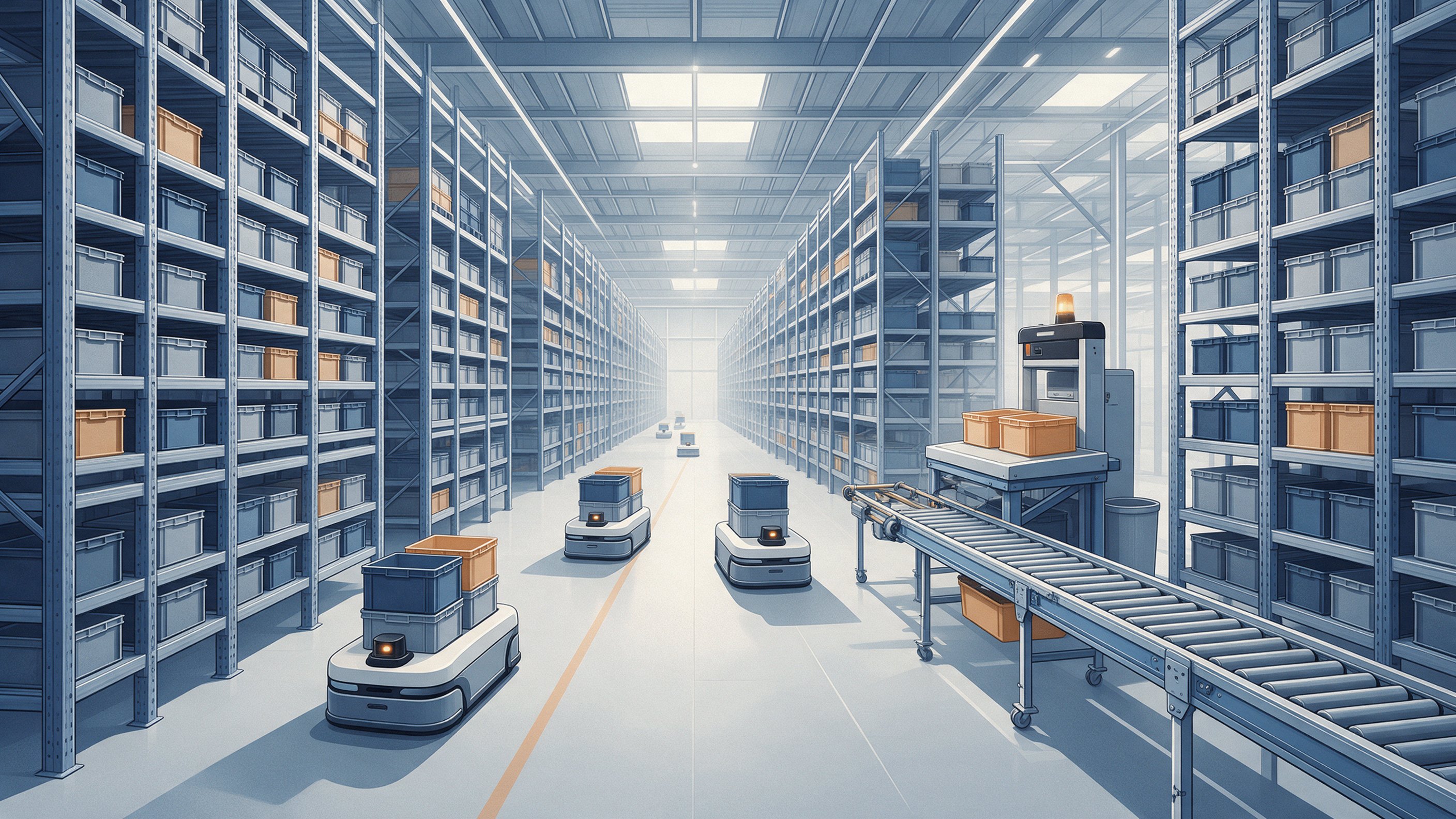
Hellmann Worldwide Logistics is to automate storage, order fulfilment and the movement of materials at Siemens' Nuremberg site with a robotics system supplied by Exotec, under a new logistics partnership between the two companies. Hellmann has operated the warehouse at the site as a full-service logistics provider for Siemens Smart Infrastructure Buildings since 2025.
The installation is scheduled to go live in mid-2027, timed to support future growth and expected annual increases in volumes. Autonomous robots will put goods away and retrieve them, and will carry totes to the picking stations. The system will initially provide around 35,000 storage locations and is designed to scale as demand rises, with storage capacity and picking stations able to be added flexibly and with minimal effort.
According to the partners, the automation will create additional capacity for the site's anticipated growth while improving efficiency, quality and space utilisation. Siemens' Smart Infrastructure Buildings are built to manage their own energy demand and generation, with a two-way flow between on-site generation and storage and the external grid; the company says this lets supply and demand be balanced in a way that helps avoid wasted energy and cut greenhouse gas emissions.
Daniel Schnuck, director of global warehouse at Siemens Smart Infrastructure, said the new automation solution would give the Nuremberg site a foundation for future growth, allow operations to be improved continuously and help maintain a flexible, consistently high level of service for customers over the long term.