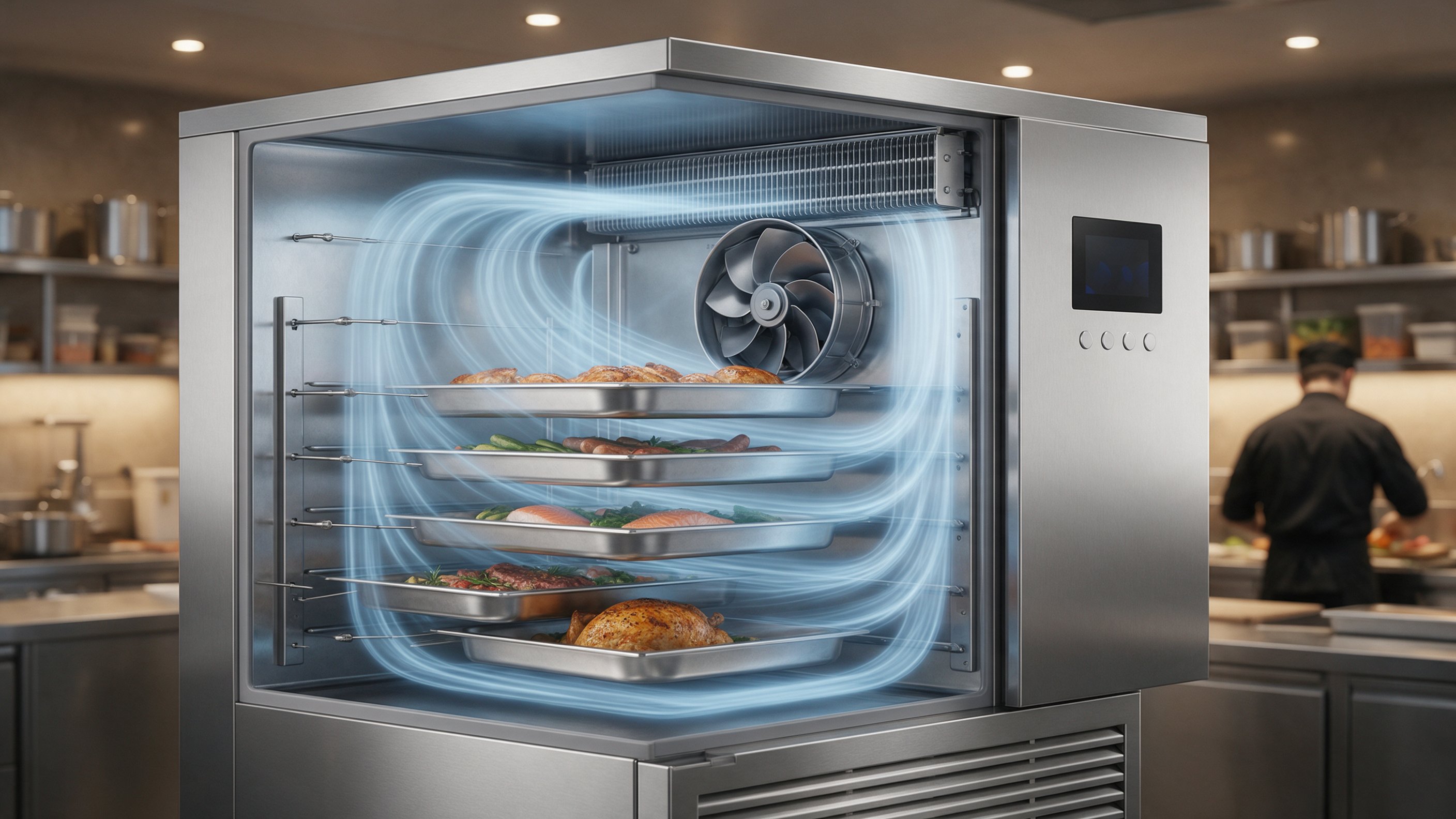
Professional refrigeration is being reshaped by three pressures: keeping food safe, cutting electricity use and preparing for tighter European product rules. Blast chillers, once treated as specialized kitchen equipment, are now being positioned as part of that response because they combine rapid cooling with process control.
The core function is straightforward. After cooking, food can remain in a “danger zone” of roughly 63°C to 4°C, where microorganisms can multiply quickly. HACCP systems therefore focus on shortening the time food spends in that range. Blast chillers use intensive cold-air circulation to bring food from more than 70°C to below 3°C in as little as 90 minutes, according to the article. The result is not only compliance but also longer shelf life and better retention of texture, moisture, aroma and nutritional value, while supporting production planning and reducing waste.
Airflow becomes the design bottleneck
Performance is often associated with the refrigeration circuit, compressor or evaporator. In practice, cooling depends heavily on how evenly cold air reaches the load. If some areas have lower air velocity or turbulence, parts of the product cool more slowly, creating temperature differences that can undermine safety, cooling time and final quality. That has made fan design and motor control more strategic.
EC, or electronically commutated, motors are central to this shift. They combine high electrical efficiency with continuous speed control, allowing airflow to be matched to each stage of the cooling process. When paired with biomimetic impeller designs and composite materials, suppliers say the result can be more uniform cold-air distribution and lower energy use. The same approach can reduce noise, generate less heat inside the refrigeration system and, because EC motors run with lower mechanical stress and more precise control, extend service life and reduce maintenance needs, according to the article.
Digital controls add traceability and integration
Modern blast chillers can select programs by food type, monitor temperatures through probes and record the full process for traceability. That record is useful during food safety audits and helps demonstrate HACCP compliance. Open communication protocols such as Modbus allow the units to connect to kitchen infrastructure and building management systems, enabling remote monitoring and predictive maintenance. Continuous analysis of temperature, fan speed, operating hours and energy consumption can flag deviations before they become failures, reducing maintenance costs and improving availability.
Ecodesign raises the bar
The EU’s Ecodesign framework is moving beyond energy performance alone. It is incorporating durability, repairability, digitalization and system-level efficiency, and the Ecodesign for Sustainable Products Regulation (ESPR) is guiding the next generation of equipment. Many measures will arrive progressively, but the 2026 horizon is already influencing decisions by manufacturers and engineering firms. As a result, performance improvements are less likely to come from the refrigeration circuit alone; motors, fans, heat exchangers and electronic controls will all matter.
ZIEHL-ABEGG illustrates the trend with EC axial fans for commercial refrigeration and food service that combine high-efficiency motors, aerodynamic design, low noise and open-protocol communication. The article also argues that manufacturers, installers and engineering firms will need broader expertise in electronics, connectivity and control systems. Installers, in particular, are expected to act less as equipment suppliers and more as technology advisers across the equipment lifecycle.
The direction is clear, but the gains are conditional. Rapid cooling and energy savings depend on how evenly cold air reaches the load, how the equipment is integrated into kitchen systems and whether performance is monitored. Food safety remains the primary objective; energy efficiency and digitalization are becoming part of the same design problem rather than separate add-ons.